Saturday, 22 June 2013

My Journey to Explore Golf Courses in the North: My visit to the NCR

The National Capital Region (NCR) in recent years has the seen the greatest development of golf course development than any other part of the country. The main areas in the NCR are New Delhi, Gurgaon, Noida and Faridabad. In just three out of these four, (New Delhi, Gurgaon, and Noida), there are over 20 golf courses with a further 10 in different stages of development.

A view of the large greens found at the course
Gurgaon alone, boasts three ‘Championship’ 18 hole golf courses and one 9 hole golfing facility. In this city it is expected that another two 18 hole courses will be added and some of the existing 18 hole facilities will develop smaller 9 hole golf course attached to the property. What could be spurring this frenetic development in this region? Green fees at these clubs are upward of 2000 rupees a round and the golfing population is not very large…

The Characteristic tight and rolling fairways
The first course I visited here was the Classic Golf Resort. It is located 30 km from the center of Gurgaon and is developed by the ITC group. It is also the first golf course created by Nicklaus Design group. The contrast in style to the Kalahaar Blues and Greens in Ahmedabad was stark. The fairways are wider on this course and there are fewer water hazards. However the greens remain very treacherous as they are narrow and have multiple breaks. The course features 27 holes and is spread over a sprawling 300 acres. The hotel is under construction and is expected to be ready by the last quarter of this year. The only challenge this golf course faces is the access to the property because the inner roads, leading off the highway are not in good condition. As with most places in Gurgaon it is the lifestyle aspiration that seems to be drawing people to the course and hopefully this will continue and allow the course to play a pivotal role in the future of Indian golf. The management is waiting for the hotel to be completed before they actively pursue any marketing activities for the course. With the kind of investment being currently pumped into the course, its not hard to imagine this becoming a very popular destination for golfers across the world.


Peacocks are a plenty at the course!
What is evident in this city, compared to others in India, is that golf is very clearly being used to support the creation of a lifestyle and image that many Indian city dwellers aspire to. The sport itself is secondary. Golf is viewed as an elitist sport and developers are cashing in on this aspect to sell real estate around the golf course. Is this positive for the game in India? Or is it filling a social need? It is known that the NCR region being the political capital has a large number of affluent and high net worth individuals (HNI), who are driving costs of real estate and lifestyle including golf. If one of the fall-outs of this trend is better and even world class golfing facilities it can only benefit the game in the long run. New talent can emerge and major tournaments from around the world can come to India, lifting the profile of the sport.

Sunday, 26 May 2013

My Journey to Explore Golf Courses in the North: The Rambagh Golf Club, Jaipur


I had been looking forward to this part of the trip for some time. The city of Jaipur takes one back in time, to the India of old where people spoke of an exotic destination of the east shrouded in royalty and mystery… From the beautiful palaces to the tantalizing street food, Jaipur is a treat for the senses. The pink city of India also boasts of one of the most beautiful golf courses in India, the Rambagh Golf Club.

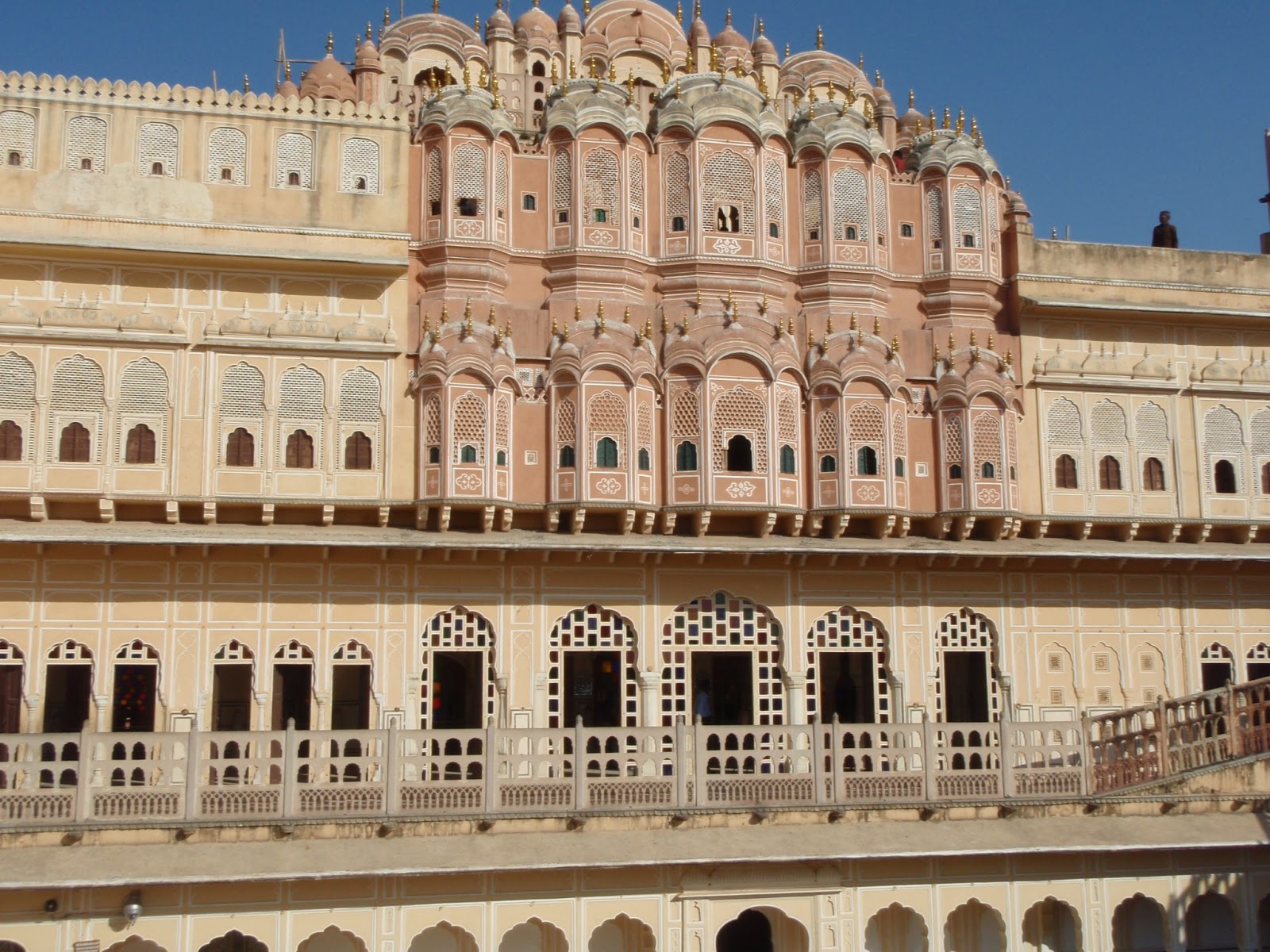
The Spectacular 'Hawa Mahal' in the Old City
The Rambagh Golf Club is located on the grounds of the Rambagh palace and is patronized by the Royal family of Rajasthan. The golf course is stunning with almost every fairway lined by a variety of flowering trees. The course itself is quite small, spread over 80 acres of land, but it is very well designed as it is offers 18 individual holes of golf. This is the only course in India that has a true compact course design. The fairways are tight and demand accurate tee shots from the golfer, but for the most part it is straight forward and does not feature many hazards to trouble the scoring.

This club is one of the many  prominent social clubs in the city. The golf club is controlled by an association of members, while the land is leased from the JDA (Jaipur Development Authroty) similar to most other golf clubs in India. The course has been host to many amateur events in the past; however, the focus has not been on championship tournaments. It aims to promote the game and encourage more people to take up the sport.

The manicured fairways of the Rambagh Golf Club 
 The layout of the course was interesting to me because the golf course had 18 holes and did not take up too much of land. During times where land costs are escalating this is important in order to develop golf courses. In order to make golf more accessible the country will need more of such well-designed golf facilities. Unfortunately, for many years, people hold the misconception that golf requires very large acreage (greater than 175 acres) to play; this golf course breaks that myth. This could makes it easier for the sports ministries at the center and the state to allocate land for promotion of the sport.

I have often said that golf can be a sport that India can compete in. However, there is a strange apathy in the sports ministry towards non main stream sports such as golf. This has got to change. In the years ahead I hope that the attitude to golf that I have seen here is replicated around the country; where people are encouraged to play and courses are not out of reach.

The Imposing 'Amber Fort'
My next stop on this tour is the heart of India’s golfing world the NCR and Delhi. For many years golf in India has been centered mainly in the North, with cities such as Gurgaon, Delhi and Kolkatta being centers for major tournaments or golfing exhibitions. In fact most of the major governing bodies for the game in India are based in Delhi. In recent times the NCR has seen a flurry of new golf courses, each of which hopes to be the best course in the country. It will be interesting to see this first hand… Next stop Gurgaon! 

Friday, 24 May 2013

My Journey to Explore Golf Courses in the North: Gulmohar Greens


The Gulmohar Greens presents an unusual course for golfers. The course has nine greens, but 18 holes can be played through a repeat nine with different hole locations. The Gulmohar greens is part of a country club and the focus is on recreation and family entertainment rather than golf. This is very different to Kensville and Kalahaar Blues and Greens, where the main activity is the golfing.

The golf course is very well laid out and features a compact course design with a combination of long par three holes and a few short par four holes. There are very few hazards on the course making it quite an easy and enjoyable round of golf,that one can play with the entire family.

There are not many nine hole golf courses in India. There is a common misconception with golfers that a 9 hole golf course will have an average quality and challenge. This is not necessarily true. In fact 9 hole golf courses can be extremely challenging if creatively designed. After just visiting a championship golf course, it is intriguing to see this format that I believe will be critical to growing the game in this country. Not everyone can play on a championship golf course, but a nine-hole facility, can be open to anyone.
In India a challenge that many developers are facing is the high cost of land. Therefore for golf courses to become viable options for developers to consider, reducing the land requirement of a golf course becomes critical. A 9 hole golf courses could be an answer.

On contrasting the two styles of golf courses, it is evident that there is a need for both. A championship golf course to attract the talent; and a nine hole golf course to encourage people to take up the sport. What needs to happen is a change in the mind set of golfers that both courses have their merits and it is not a question of one being better than the other. These are just different styles of golf. Both complement each other and both are necessary if the game is to grow and succeed.

As I leave Ahmadabad  I look back on the two golf courses I have visited; each very unique and necessary especially as the game is growing in India. Currently there are little over 200 courses in India and more than 50% are owned by the army. This makes it a very small number for a country which has a golfing population of little over 300 million. Golf Courses like the Kalahaar Blues and Greens lift the standard of golf facilities and golf courses like Gulmohar Greens give people access to the sport.

I now move to Jaipur, I hear that the Rambagh golf course is the most beautiful in India in terms of its location and scenery. I cannot wait.

Thursday, 23 May 2013

My Journey to Explore Golf Courses in the North: First Stop Kalahaar Blues and Greens


Tucked away in Ahmadabad is a new 18 hole golf facility that hopes to become the leading golf course in the country. This is quite possible. It is the Kalahaar Blues and Greens located 20 km from the city. This golf course by Nicklaus Design and is one of the toughest courses that I have encountered. The course has very tight fairways with water in play on almost every hole. The greens are also very narrow and require accurate approach shots from the golfer. Even the bunkers are challenging as they are beach bunkers which brings the water into play even in the bunker!! Every hole demands prudent play from the golfer and any wayward shot will be punished, either from the tee or fairway.

The Large Bunkers are a standard feature on the course
 The course is currently almost ready for play, with 2 holes to be completed on the back nine. Once this course is operational it will most certainly have a shot at the title of ‘India’s Championship Golf Course’. It is safe to say that if you are below a 15 handicap, this course will be stimulating to play as it forces the golfer to carefully plan each shot. On the other hand, this could also be a potential problem.

Ahmadabad is one of the oldest cities in India with a rich historical tapestry. It is most renowned for Mahatma Gandhi’s Ashram located here. Gandhi spent much of his life in the Ashram and consequently Ahmadabad was the epicenter for many skirmishes during the freedom struggle. Post-independence this city has grown steadily; in recent years benefiting greatly from initiatives launched by the Gujarat government to encourage foreign investment into state. However, the cities tryst with golf has only just begun. For many years Ahmadabad had only one private golf course, the Gulmohar Greens, located 25 km away from the city. A few years ago, the Kensville Golf and Country Club was added, located approximately 1.5 hours away from the city. The later was the first 18 hole golf course developed in Ahmadabad.
A view of the tight fairways the course offers 
The Kalahaar Blues and Greens has a distinct advantage of being relatively closer to the city than Kensville; but, is this city ready for a championship golf course when golf here is still a growing sport? Are there enough golfers (Below a 15 handicap) who can appreciate the challenge this golf course presents? These are some tough questions to answer, and only time can tell. From a golfer’s point of view it is about time this happened; this country needed a course that can be on par with the best courses in the world and attract world class players. This is a must watch course for me. I will be very interested to see how the course develops and raises the standard of golf played in India. Kalahaar Blues and Greens is going in forefront of Indian Golf soon.

As a first stop on my travels to golf courses in the North, this set the tone for the rest of the journey… Next stop: ‘Gulmohaar Greens’…

Sunday, 3 March 2013

Indian Golf Expo; Feb 21-23

Over the next few days, all eyes will be on Pune as India's only golf expo gets underway. It is an opportunity for those in the industry to meet, connect and discuss common issues faced by those in the industry.

As India develops and the golf industry expands events such as these will be necessary to showcase the different golf courses and even the latest developments by Indian companies in the field of turf management and golf course development. Since golf in India is very new, events such as these are important as they help shape the future of the industry.

This is only the second year of the expo and already the issues being discussed are growing, with even more illustrious members joining the panel. A golf expo the world over is important as it helps the companies connect with their consumer, it also helps clubs connect with their potential golfer. This interaction is important for all parties, as clubs need to understand the demands of their market and from a consumers perspective it is always important for them to see where the future of the industry lies.

I have been looking forward to this event for some time and am eager to see all that is in store. This is a step in the right direction, earlier there were very limited opportunities for those in the industry to meet, unless they were members of organisations such as the PGAI, IGU, IGAI etc. This event has enabled people from various facets of the industry to be brought under one roof where they can connect with each other. In the future though I do hope many more events are organised, it would be wonderfully to have multiple trade shows for the various regions in india, because each region affects golf so differently
I urge many a golfer to participate and support such events and look forward to seeing you there!

Monday, 29 October 2012

The Indian Open


October 18th-21st at Karnataka Golf Association Bangalore

Golf in Bangalore will not be the same again. In what hopes to be a great boon for golf in the South, the Indian Open has made its début at the Karnataka Golf Association for the first time. Some of the best names on the Asian and European tours (along with some phenomenal desi talent) will descend onto India's first ‘silicon valley’.

This tournament is by far India’s biggest professional golfing event, it was conceived a few years ago and over the years has been gaining momentum and interest from players across the world. Just like other South East Asian nations, India has some very unique golf courses, even historic ones and it is important for large events such as these to draw attention to and golfers to these locations. There is a move afoot to rotate the location of the Indian Open. I am in favour of this because it allows different courses to experience this event, of course assuming the said golf course meets the minimum requirements set by the organizers.

Unfortunately this is the only major Indian golfing event of this scale. It is equally important to encourage more tournaments such as these. Rotating this event can help, but it begs the question, why does the entire future of Indian golf depend on this event. Can there not be many more events organized, and even the current tournaments that are played, shouldn't spectators be encouraged to view these events as well?

The effort that this tournament is making is applaud able and needs to be supported by all golfers in the across India.  I do hope people turn up in large numbers entry is free so bring your friends. This is a great showcase of what Indian Golf can be and what the future holds!

See you at the event! 

Tuesday, 18 September 2012

A very Interesting Golf Course....


Wellington is a small quiet outpost just outside the busy town of Conoor in the Nilgiris Mountains. This area of lush jungle provides a reprieve for residents who like a place of natural beauty reminiscent of what hill stations used to be. Earlier the area was occupied by plantation owners, and a small section of British troops. Along with them came some traditional British pass times, including golf.

The Wellington golf course was set up differently from other courses I have seen. It was a joint development between the plantation owners and the troops stationed there. The army provided the land and the plantation owners helped to develop and maintain the golf course. What makes this unique is that years after the British have left, this partnership continues. It is one of the few army courses that allow civilians to play and remain as members. Over the years the troops stationed here have greatly reduced, and only the Officers Academy remains.

Some Golfers hiking up to the Green 
It is evident that the course grew organically, as more land became available in response to demand and the number of players. This golf course is mostly a par 3 course, with a few par 4s and one par five. What is curious about this golf course is the design. It is quite evident that there was no prior planning for the interlinking of holes, and access, and comfort for the golfer. At some points one has to walk almost 300m     (through the college, across a road), to access the next hole. The course features some unique greens that are nearly vertical with steep inclines to get to them, which is a huge challenge and a great workout to get to the hole.

All said and done, it was fun to play to play here. It is unfortunately not a recognized golf course because of its design and shorter length of the holes. But as a fun round there is really nothing better. The course is kept in decent repair, with the greens protected through the year. The fairways have lost the original grass and are over run by a local zoysia variant which is more of a weed, but it is mowed down well enough to provide the golfer with a decent lie.

Another difference is that guests are allowed to use the clubhouse and play for a reasonable fee (not so in other nearby courses). Over the years the club has begun to limit the number of new members particularly civilians. This is unfortunate because this golf course displayed a unique relationship between the army and civilians; which I feel can be adapted to other army courses throughout India.


Wide Fairway, Beautiful Mountains.... Must be heaven
There are currently a little over 200 courses in India, and the army owns more than 50% of them. My thought is that the army can continue to own the course but the management can be outsourced to civilians in a partnership arrangement. This would keep the courses alive and promote the game as well. The critical part in all this is the willingness of the military to participate in such activities and their interest in developing sports such as golf. Thus far the military has been very possessive of the land they control and want to limit civilian interaction. I hope the day will come when civilians and the military can join forces in the interest to develop the greatest game ever played.