Tuesday, 22 May 2012

Golconda Golf


Hyderabad is truly a spectacular destination to travel to in the south. It is rich in history and has some of the tastiest biryani you will eat (…paradise biryani…yumm). Over the years this quiet town has slowly mushroomed into a sprawling well laid out city on the verge of becoming one of the new Metros of India.  Golf has been an important part of Hyderabad for a number of years. The army has many golf courses that were patronized by golf addicts from the city.  Over time the need arose to have a separate golfing facility of superior quality that would be committed to the development of the game in Hyderabad. Thus the Hyderabad Golf Club was born.

A view of the Golf Course
The Hyderabad golf club is located behind the Qutub Shai tombs, with the back drop of the Golconda Fort. This makes it a truly spectacular golf course. All the holes of the golf course are played in the shadow of the fort with some even skirting the fort wall. This golf course is close to 10 years old and the land was allocated by the Department of Tourism. Earlier this area was used as a garbage disposal area by the Hyderabad Municipality and it is safe to say the golf course is a welcome change. The total land allocated was 200 acres but the course is situated on only 75 acres of land. The remaining has been under litigation due to some environmental agencies opposing the construction of the golf course in such close proximity to a national heritage monument. In recent years many of the cases have been won, with the Archaeological Department itself claiming that the golf course would be a good buffer in the area, ensureing the surrounding areas do not fall into disrepair.

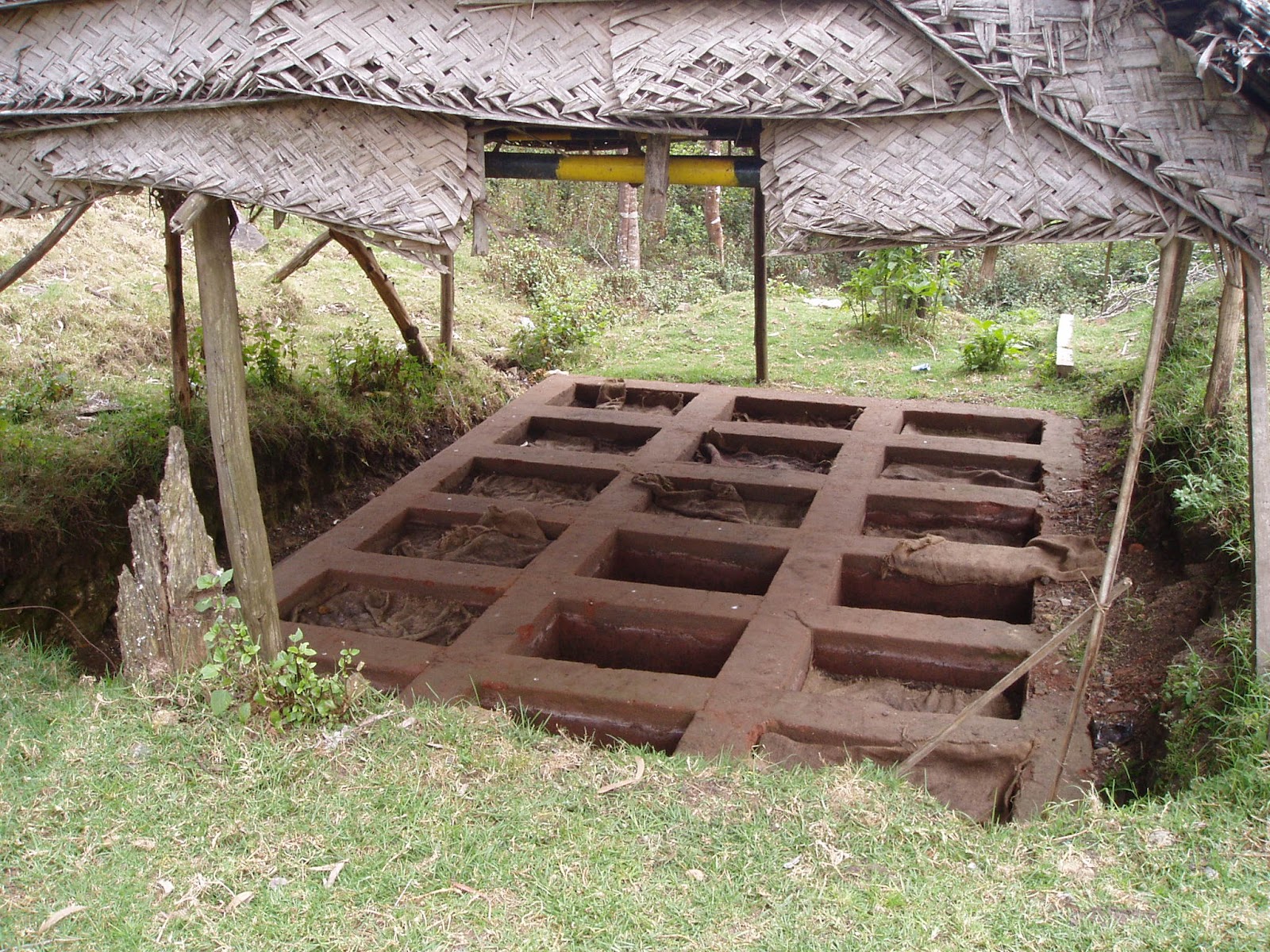
The Organic Water Treatment Plant
The layout of the golf course is incomplete being short in length with only 9 greens at present. This nine can be repeated with different hole locations to offer 18 holes for the time being. The greens are tight and prudent approach shots are necessary for the golfer. However the fairways are forgiving which takes some pressure off the golfer. The interesting aspect of this course is that it is completely self sufficient in water. In fact even during the harsh summer temperature of 38 degrees centigrade, the course is brilliant green! The course is conveniently located around a sewage drain and has developed its own sewage treatment plant and treats enough water to sustain the golf course 365 days a year. As this water is not potable, for other purposes, the course purchases water from the city but the savings from the water treatment plant are immense.  The grass on the course is a local variety and responds to the water used. The course features tiff dwarf on the greens and a local ‘dhup’ grass on the fairways.


A view from the club house
This visit provided a lot of food for thought. For one, could the development of golf courses around heritage structures be a solution to promoting the site and the game, especially since the tourism department has so actively endorsed it in this state? The idea of utilizing the sewage water offers another solution to the huge demand for water faced by any golf course. The treatment plant itself is fairly uncomplicated and uses organic techniques to treat the water, (percolation through the soil, settling and re percolated). I believe this golf club is poised to become one of the most beautiful in the country. In recent times the course has been able to resolve many of its issues and begin developing the latter part of the property. I eagerly look forward to revisiting this course which would have transformed itself and the heritage area around it. 

Saturday, 5 May 2012

Golfing in the territory of the ‘Super Kings’


For the past few years Chennai has dominated the cricket scene with the ‘Chennai Super Kings’ bagging the coveted DLF IPL championship two years in a row. Although it has had its share of cricket and tennis fans, there has never been such fervor in the game as expressed today. The game of golf too in Chennai has steadily been developing in terms of players and facilities and is all set to capture hearts and fans in this South Indian City.

In the last 5 years this city has witnessed an explosion in the number of golf courses. Earlier the city had one private golf course (the Madras Gymkhana) and a few army courses. Now the city has 3 private courses, another two in the pipe line and even a standalone driving range with a 9 hole executive course! One of the main reasons for the increase e in popularity of the sport is the growing number of MNC’s who have setup operations in Chennai. Another factor is the return of NRI’s (Non Resident Indians) who understand the importance of golf from a business and recreational perspective.
Interestingly golf has been a very old sport in Chennai, the 130 year old Madras Gymkhana being one of the oldest clubs in India, after the Royal Calcutta Golf Club in Kolkatta. In fact one of the oldest running shields in the golfing world is played between the Bangalore Golf Club (the third oldest course in India at 128 years) and the Madras Gymkhana Club.

On my visit to the golf course of the Madras Gymkhana, I discovered it is a unique 18 hole par  70 golf course located in the middle of the Madras Race Course (horse racing). The course covers 100 acres with tight fairways and small greens that demand accurate approach shots from the golfer. The course also features 3 par 5’s which demand prudent play with one of these par 5’s being 603 yards from the championship tee. During the summer the course plays slightly easier as the fairways are drier and the ball does not hold. The most interesting feature is playing golf in the shadow of the race course, where even on a non racing day, one can hear the din of cheers and the hype of the announcer as races and results of events held elsewhere are broadcast over the PA system. Golfing is allowed only on non racing days. I thought it was excellent use of vast land that lies unused on the inside of a racing track. The facilities and buildings of the turf club are shared with the golf course. 

One of the main challenges facing developers in the city is the availability of land. As the city of Chennai has expanded, the cost of land has more than doubled. This high cost also makes development of courses questionable, as the land could possibly be better suited for large scale housing which is a priority social need. Another challenge is water. Courses such as the Madras Gymkhana and the Officers Training Academy have an advantage because they are situated virtually in the heart of Chennai. However transport and availability of water tends to become more difficult and expensive for those located on the outskirts.
These constraints have been overcome by some of the golf courses. In fact, the Cosmopolitan Club has developed its own in house water treatment plant that enables it to reuse sewage water. The Madras Gymkhana Club has similar plans to purchase treated recycled water from a hotel nearby.

In recent times golf has been dormant in India, with only a handful of clubs offering membership and not much of an ‘active interest’ shown by the public for the game. Things are now changing. I believe that the change in how golf was perceived in Chennai could reflect a transformation in attitude towards the sport in other parts of the country as well. As the country develops, more people become affluent, the number of NRI’s return home and the inflow of foreign tourists and expats increase, demand for the game is bound to rise. In Chennai today, avid golfers are members of not one, but at least three golf clubs (the Madras Gymkhana, Cosmopolitan and the Kodai Golf Club). All this in the span of the last five years…  I cannot wait to see the transformation in golf in other parts of our country!

Thursday, 29 March 2012

The Best in India Arrive in Bangalore


30 of indias best, 3 days, 1.2 crores. The Louis Philippe Cup was the first team match play golf tournament to be held in Bangalore. The field of 30 players was divided into 10 teams, representing the major cities in India. For three days golf addicts were treated to the best in Indian golf. It was a rare treat to watch these players in one setting, competing for the same prize. What made this tournament even more special was that spectators were able to walk on the course, and follow players, something that was never allowed or encouraged before.

Golf in India is a relatively new sport, and it is important to encourage the game. Initiatives such as the Louis Philippe are necessary to generate interest in the sport and encourage new players. In India, sports such as golf tend to play second fiddle to cricket, as it is considered very exclusive primarily due to the high cost of equipment and the lack of access to golf facilities.

Events such as the Louis Philippe cup are important as it showcases talent in the sport. It draws attention to dominating players who may go on to make a mark for themselves and India in the global arena. The spectator format encourages the golfers, as this can be a very lonely sport even at the tournament level, with very little public appeal and T.V coverage.

Interestingly some of the golf players in India have been caddies at golf courses and through sheer determination and raw talent have made a name for themselves; case in point, Mr. Muniappa from the Karnataka Golf Association, who has been a winner on the Asian circuit. It is tournaments such as these that prove there is interest to take the sport to the next level, which will encourage more Indians to play golf.

There is a growing section of society in India that appreciates golf and is fueling the demand for new golf courses. I am excited to be entering the industry at this time. I believe the Louis Philippe Cup should be the first of many tournaments of this nature. From restricted entry to courses, people are now allowed to walk, follow, and be up close with the golf stars. Something is changing in the golf world of India; watch out, the elephant is moving! 

An Organic Golf Course


The Kodai Golf Club, situated on 95 acres of forest in Kodaikanal is one of India’s more beautiful golf courses. During the summer season its fairways are lined with flowering trees that make some of the holes look truly magnificent. At a height of 7000 ft the course is long, very hilly and is by no means easy to play. It also does not help that the ball flies much further here than at sea level. Playing a round of golf here is very affordable, requiring only a valid handicap card from ones home golf course. A round of golf costs USD 5 for 9 holes and USD 10 for 18 holes.

The Club House of the Kodai Golf Club (approx 116 years old)
For the better part of the year this course remains quite empty; this allows the members to have a relaxed round of golf (at times the number of players are down to even 4 for the day). This golf course is small in terms of total membership, with only 339 members. Out of these, only 20 are from the local area. Most of the members are from the metros and use this club as a holiday destination during the summer.

As this golf course does not see very much play, it can be costly to maintain. However this golf course has developed methods to overcome this, which could be worthy of emulation by small and remote golf courses. No chemical fertilizers or pesticides are used on this course. It follows the practice of bio dynamics that attempts to return nutrients to the soil through the application of prepared manure. On the greens the golf course uses a mixture of cow dung, urea, eggshells and some sand that is dried in a compost pit. This mixture is spread over the greens, and has yielded good results, where the greens stayed alive even through the harsh winter. The golf course also uses an interesting mix as fungicide and pesticide. For this, cow dung, urea, ghee, over ripe bananas and tender coconut are mixed and allowed to ferment together. Water is added in a 1:10 ratio. This is sprayed on the grass of the fairways and greens when required. This opens up many possibilities in terms of reducing the cost of course maintenance. This organic focus would also cause less harm to the environment.

The in house fertilizer and pesticide manufacturing area
On the other hand, this golf course is small in terms of its local membership size (20 members), and total number of rounds. Further this course is located in the mountains where the numbers of ‘pests’ are less. Cow dung is a great source of nutrient and can attract some unwanted pests especially in the warmer climates. It remains to be seen if these methods can be applied to the courses in metros that see far more footfalls and usage in a single day leading to intensive use of chemical fertilizers and pesticides to maintain the green appearance of the fairways.


The organic maintenance of golf courses is a very new subject, and I believe, in a place like India, it has a real potential. Golf courses are generally located away from the city and transporting fertilizers can be a huge cost. Locally available growth promoters could be an answer although organic solutions may not yield quick results.  It remains to be seen if the Kodai Golf Course organic model can be effectively used by golf courses in other locations as well. 

Friday, 16 March 2012

An Elitist Sport of India


This is a follow up of my earlier post ‘An Island in a Sea of Development’. After my visit to the Bombay Presidency Club, I realized that something was not right. In a city, referred to as ‘maximum city’ of India, there are only three golf courses, while Bangalore has 8 and growing! So I started to pay attention to what I saw around me in Mumbai that could explain this conundrum, even as I visited the second golf course in the area the Wellingdon Sports Club. 

The Club House of Wellingdon Sports Club
The Wellingdon Sports Club is located in South of Mumbai, close to Mahalaxmi train station, opposite the Mumbai racecourse. It is very easy to access the club; with options of train, bus, local taxis and auto rickshaws. The club unfortunately does not offer accommodation. It allows guests to play at the golf course for a green fee of USD 30 for 18 holes, while members of the Indian golf Union (IGU) receive a 50% discount. Caddy fees are a flat USD 4, and carts are available only for use by senior members.  Guests to the golf course do not automatically have access to other facilities of the sports club.

This golf course is relatively small; built over 35 acres; it is a par 65 course. It features only one par 5 for the 18, and is a ‘Compact Course’ design. The grass is a local variety and extends to the greens as well.  The course is short and the fairways are narrow. It is possible to keep the driver in the bag and have a very good round. There are even a few holes where it is possible for one to drive the green.  The course provides for a very enjoyable round of golf, which can be completed in fewer than 2 and half hours.

A view of the Practice Area of Wellingdon Sports Club
The sports club has a total membership base of 7000 and offers a variety of sports including tennis, cricket, badminton, squash, swimming and billiards. It is very interesting that only around 10% are golfers. This is in spite of the presence of a trained LPGA, and PGA (UK) coach, Kiran Kanwar, a current playing lady pro, Mita, heading the golf sub committee and a green fee of only Rs. 10 for the members if they should want to play. Still there have been few takers. It is my humble opinion that maybe golf in this club is competing with other sports, and an unfair comparison is being made, where parents would rather send their kids to play tennis and get more exercise in less time than it takes to play golf. 

Hole No. 1 of Wellingodn Sports Club
There is also another view, that golf in Mumbai is a very exclusive sport. For instance the demographic of members in both these clubs (Bombay Presidency and Wellingdon Sports Club) shows that one has to be affluent to have any form of access to golf courses. To promote the game, clubs can organize events such as nature walks, bird watching and environment talks at the course, to at least bring members to visit the facility. The club also needs to be more supportive of talent, and encourage youth from the community to join through student memberships. This could generate new interest in the game, and encourage more of the non-playing members to take up the sport. However it remains to be seen if the older members will allow newcomers to walk the hallowed grounds…

An Island in the Sea of Development


Would you believe if I said that 84 acres of green land exits in the heart of Mumbai? I would bet that more than half would laugh, and still others would wonder if one is talking about the same city. Over the years India’s maximum city has expanded so quickly that people have forgotten that there were empty lands once upon a time. However these oasis of green do exist, in the form of the Bombay Presidency Golf Course.

The golf course is located in Chembur, near the Diamond Garden. The course features relatively wide rolling fairways, and reasonably fast greens.  The grass is pas palim on the greens as well as the fairways.  Pas palim is unique as it is a salt water grass it also has a rich green color (it is possible to see shadows of the mowing on the fairways and the green), which is important to the golf club. The golf club also offers carts for hire (they are available at 500 for 18 holes and 250 for 9), however for seniors carts are available at 250 for 18 and 125 for 9. The course also offers caddies at 200 for an 18 hole round, if they are unavailable one has the option at using a trolley for free. Either way a trolley is available on hire for Rs. 50 for the round.


The Club House of Bombay Presidency Golf Club
This golf club is primarily a tournament course, and features at least one tournament a week, be it a club event or a local sponsored event, and even a professional event. The golf course is a par 72, and features multiple doglegged holes, that demand prudent second shots form the golfer. Any wayward shots end up OB, so it is important to be selective where one decides to pull out the driver.  The course offers junior coaching programs for the 'younger' members; members have access to a well qualified teaching staff, with two class A teaching pros. Accessing the golf course is also relatively easy, as it is just off the eastern express highway, or if coming from the station it is a very short auto ride away. Busses are also available, however no AC bus stops outside the golf club. The club also offers accommodation on site for out of town visitors, at Rs. 3924 for a regular room. Green fees vary for guests and members. For guests it depends on the affiliated club and the reciprocal arrangement that was established. Walk on guests are not permitted at the course.
Hole No.1 at Bombay Presidency Golf Club

The club has some very strict rules about guests, and this could be choking the development of the game in the region. This is because it reduces the number of individuals who have access to the club, and thus makes it difficult for people to take an interest in the game, because first they need a membership which is either non existent in some clubs, or would cost them Rs.28, 00,000! Could the be a reason why golf is not a very popular sport in India? There has to be a change, a maximum city cannot have minimum golf courses.  

Saturday, 10 March 2012

Travelling by Train to see the Green


To visit the Bombay Presidency Golf Course, I decided to travel by the infamous Indian Railways. This really did not seem like a bad idea, given the turmoil in Kingfisher Airlines, I might just have end up in Bangalore Airport, not going anywhere!

It was a very pleasant journey. For a change the bedding was clean and the blankets not insect ridden. However the toilets remain offensive and bring you back down to earth with a very smelly thud. But all in all it was a very comfortable journey. There are sellers forcing you to buy virtually anything, from books to ice cream and everything in between. This is so typical of train travel in India.

For little over USD 23 I’d say that this is not a bad deal. I do believe the railways have improved (or it could just be this one train). I was extremely skeptical at first, but I have warmed up to the experience. The fellow passengers are friendly and love to chat.  I am actually looking forward to my return journey…